
CellIF 45.1
Explosive cytotoxicity of ruptoblasts bridges hormone surveillance and immune defense
View full article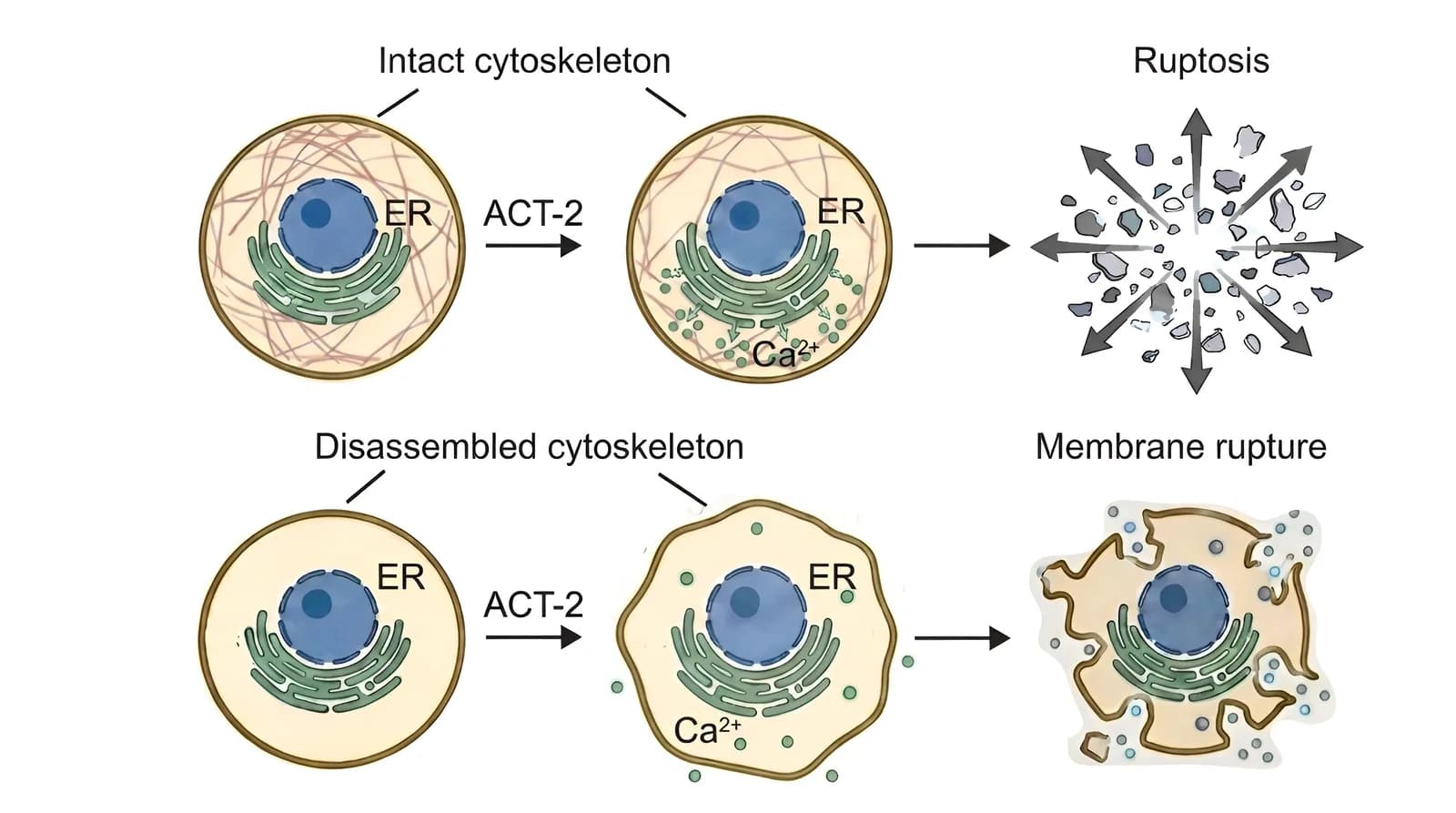
Create scientific figures with FigureLabs.
Turn your ideas, research, and data into scientific illustrations, flowcharts, and plots with AI.
Abstract
Current understanding of cytotoxic immunity is shaped by hematopoietic-derived cells—T cells, natural killer cells, and neutrophils. Here, we identify “ruptoblasts,” a previously unknown cytotoxic glandular cell type in regenerative planarian flatworms. Ruptoblasts undergo an explosive cell death, “ruptosis,” triggered by activin, a multifunctional hormone acting as an inflammatory cytokine. Excessive activin—induced through protein injection, genetic chimerism, or bacterial infection—initiates ruptosis, discharging potent diffusible cytotoxic agents capable of eliminating nearby cells, bacteria, and even mammalian cells within minutes. Ruptoblast ablation suppresses inflammation but compromises bacterial clearance, highlighting their broad-spectrum immune functions. Mechanistically distinct from known cytotoxic and cell death mechanisms, the explosive nature of ruptosis relies on endoplasmic reticulum (ER)-derived calcium and cytoskeleton-dependent signal amplification. Ruptoblast-like cells appear conserved in diverse basal bilaterians, implying an ancient evolutionary origin. These findings unveil a strategy coupling hormonal regulation with immune defense and expand the landscape of evolutionary immune innovations.