
Journal of Experimental MedicineIF 11.6
A genetically regulated SKAP2 switch modulates human T lymphocyte adhesion and migration
View full article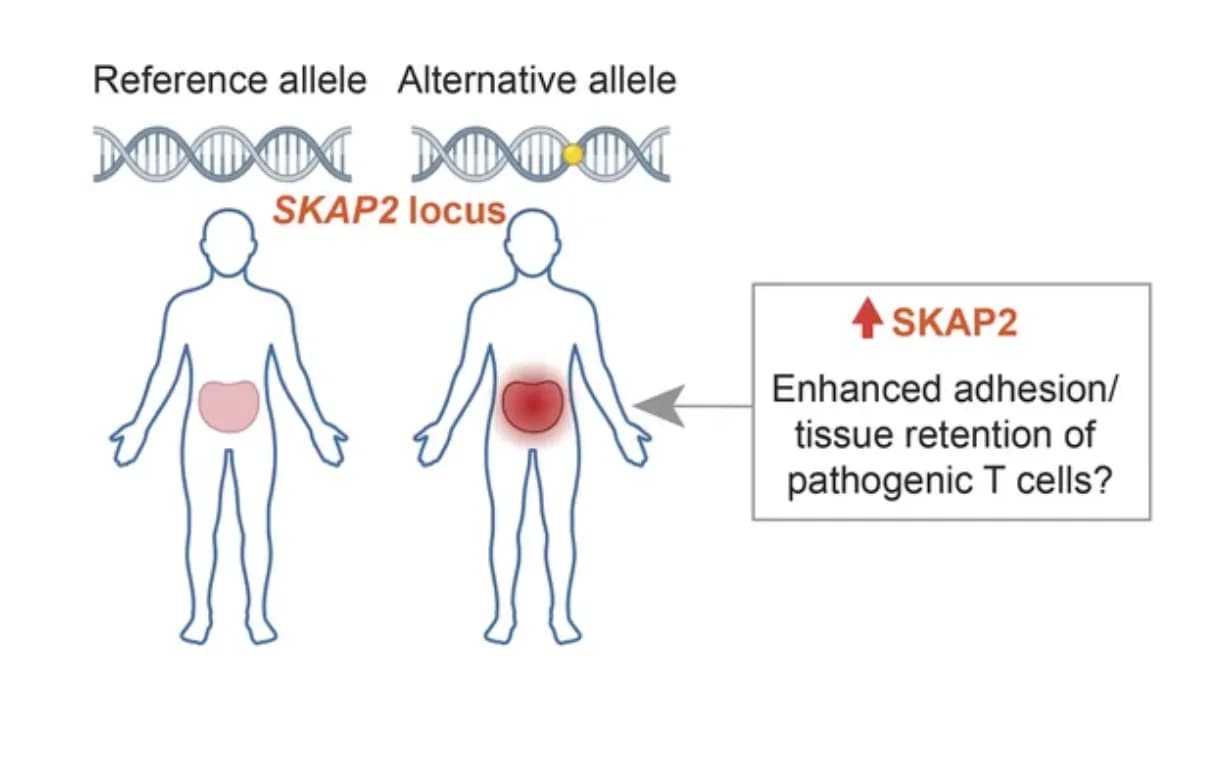
A Reward for Your Research
Used FigureLabs in a published paper? Acknowledge it and receive 1–3 months of Pro after verification.
See details
Abstract
Genome-wide association studies investigating autoimmune disorders may reveal previously unrecognized regulators of immune cell functions. A Crohn's disease risk allele was associated with increased expression in T lymphocytes of the adapter protein Src kinase–associated phosphoprotein 2 (SKAP2), whose functional role in these cells is unknown. By analyzing T cells from individuals homozygous for either allelic variant or engineered to modulate SKAP2 endogenous levels, we found that SKAP2 promotes T cell adhesion while restraining migration, acting nonredundantly with its homologue SKAP1. Consistent with such functional differences, SKAP1 and SKAP2 displayed distinct activation-induced regulation as well as unique protein interactomes. Prolonged TCR activation triggered caspase-mediated SKAP2 cleavage, leading to the disassembly of its interactome and enabling a migratory program. Together, these findings identify SKAP2 as a genetically regulated modulator of T cell function whose expression and activity control the balance between adhesion and migration.